Portrait of an elderly woman with short white hair, smiling, wearing a black blazer and pearl necklace against a dark backdrop.

Stella Chase – Continuing the Legacy of Dooky Chase

Some legacies are built in boardrooms. Others are built in kitchens. The legacy of the Chase family was built in both seasoned with faith, stirred with sacrifice, and served with an open door to anyone who walked through it. For over eight decades, Dooky Chase’s Restaurant on Orleans Avenue has stood not merely as a place to eat, but as proof that one family’s refusal to be diminished could nourish an entire city’s soul. Stella Chase did not set out to be a keeper of that flame. She was a teacher who had built her own life away from the hum of the kitchen. But legacy has a way of calling you home. When she returned to take her place beside her parents, she brought with her something the restaurant had always run on: quiet strength, deep faith, and an unwavering belief that food, at its highest purpose, is an act of love. Today, with five generations working side by side and two major national honors to their name, the story of Dooky Chase’s is no longer just a New Orleans story. It belongs to the world. And at the center of it all stands Stella Chase, steady, gracious, and absolutely certain that the best is still to come.

Boathouse on stilts in a calm lake with a shoreline community across the water and leafless trees under a blue sky

Where the Bayou Still Speaks – Arnaudville, Louisiana: A Small Town with a Creole Heart

Deep in the heart of Acadiana, where two bayous meet and nearly four in ten people still speak French at home, the small Louisiana town of Arnaudville carries a cultural memory that much of the modern world has forgotten how to hold. For International Kreol Magazine, this is not simply a Louisiana story. It is part of a wider Creole world, where language, ancestry, migration and survival continue to shape identity across generations and continents. This is a story about a place that has never stopped listening to its ancestors.
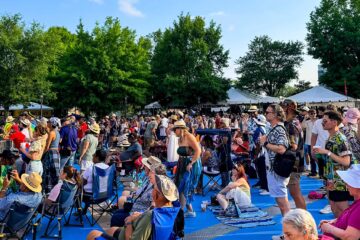
Crowd of people at an outdoor festival or concert, many standing or sitting on a blue platform with tents and trees in the background.

New Orleans Jazz Fest 2026 – Music, Culture, and the Spirit of a City

Rain could not stop the music at the New Orleans Jazz & Heritage Festival. From world-renowned performers to unforgettable moments of community spirit, Jazz Fest once again demonstrated why it remains one of the most important cultural celebrations in America. Kreol Magazine looks back at a festival where music, tradition, and resilience took centre stage.
Live band performing on an outdoor festival stage with musicians and a large banner reading 'Festival International de Louisiane' in Lafayette, LA.

Forty Years of Fête – How Festival International de Louisiane Turned a Louisiana Street Into a Meeting Place for the World

There are festivals that fill a calendar, and there are festivals that fill a city. Festival International de Louisiane belongs to the second kind. For five days every April, Downtown Lafayette stops behaving like a Louisiana town of modest size and starts behaving like a crossroads of the world, with a Malian guitar line drifting past a crawfish stand and a Belgian stilt walker weaving through a crowd that speaks a dozen languages before lunch. This year the festival turned forty, and Kreol Magazine travelled to Acadiana to see what four decades of that idea looks like in practice. What we found was not simply a music festival with good food attached. We found a working demonstration of something this magazine has spent its life arguing for, that Creole culture, Cajun culture, and the wider Francophone world are not separate rooms to be visited one at a time, but a single table everyone is welcome to sit at together. A festival with no ticket booth and no closed doors, built entirely on the belief that joy shared is joy multiplied. What follows is our account of those five days on Jefferson Street. The music that carried across continents in a single afternoon. The food that turned a city block into a communal table. The strangers who, by the second evening, were no longer strangers at all. And the quiet, considerable achievement of a small Louisiana city that has spent forty years proving the world is always better when it shows up together.
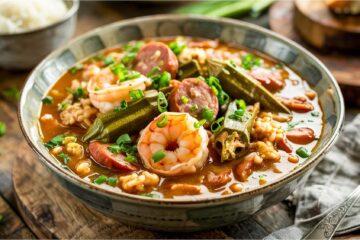
Louisiana Creole Shrimp and Okra Gumbo

Recipe – Louisiana Creole Shrimp and Okra Gumbo

This recipe is built for a family gathering, the way gumbo was always intended to be made. It scales easily, improves when made a day ahead, and fills a kitchen with a smell that brings people to the table without being asked.
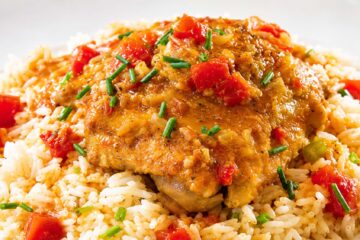
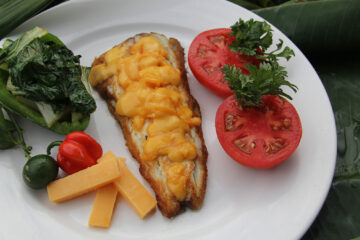
Fillet of Dorado with Melted Cheese

Recipes – Fillet of Dorado with Melted Cheese

In Seychelles kitchens, dorado is prized for its delicate flesh and versatility. Traditionally grilled or simmered in Creole sauces, it also lends itself beautifully to simple, comforting preparations like this one. The addition of melted cheese reflects the subtle European influences that have woven their way into Seychellois cuisine through generations of travel, hospitality, and exchange.
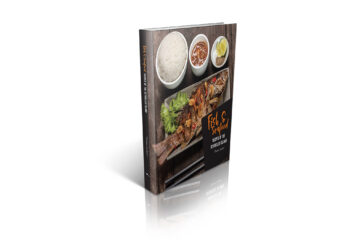
Fish & Seafood Recipes of the Seychelles Islands

Book Review – Fish & Seafood Recipes of the Seychelles Islands

At first glance, Fish & Seafood Recipes of the Seychelles Islands is a celebration of flavour. On closer reading, it reveals itself as something far more enduring: a culinary record of island life, shaped by the sea, memory, and the quiet discipline of Creole cooking.
How Food Adapts Without Losing Its Soul

When Creole Recipes Travel: How Food Adapts Without Losing Its Soul

Food travels more easily than people think. It crosses oceans in memory, in habit, and in instinct. Long before recipes were written down, they moved with migrants, sailors, workers, and families who carried flavors with them as they left everything else behind. In Creole cultures around the world, food has always been one of the most powerful ways identity survives displacement.
Bahamas

Bahamas: How Creole Culture Took Root

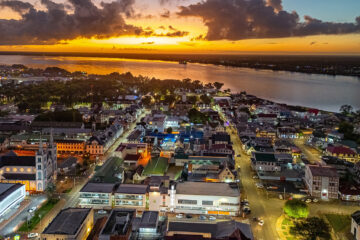
The Bahamas, an archipelago of almost 700 islands and cays north of Cuba, stretches over 800 km between Grand Bahama Island and Great Inagua Island. The thriving Creole community has grown due to the islands’ unique position at the gateway to the Caribbean Sea, the Gulf of Mexico, and the Central American region.
Speak Louder Than Borders

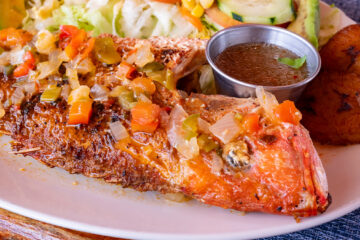
When Ingredients Speak Louder Than Borders

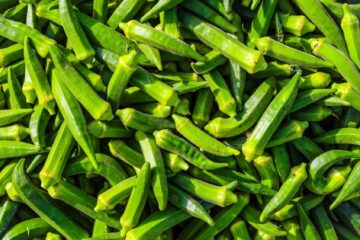
In Creole cooking, ingredients matter more than geography. Fish, onions, garlic, peppers, herbs, and rice appear again and again across kitchens separated by oceans. What changes is not the pantry, but the hand that cooks.