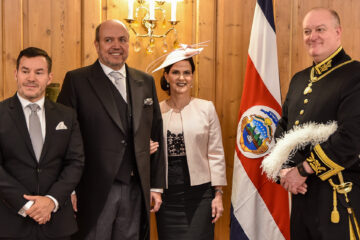
From embassy receptions and cultural celebrations to international partnerships and personal introductions, International Kreol Magazine continues to build bridges across countries, institutions and communities.
Every language tells a story, but some languages carry the heartbeat of a people. Belize Kriol is one of them. It is far more than a means of communication. It is a living expression of history, resilience, identity, and belonging. Born from the meeting of African heritage, British colonial influence, and the unique experiences of the people of Belize, Kriol grew not in classrooms or government halls, but in homes, marketplaces, logging camps, fishing villages, and communities determined to survive and thrive.
Deep in the heart of Acadiana, where two bayous meet and nearly four in ten people still speak French at home, the small Louisiana town of Arnaudville carries a cultural memory that much of the modern world has forgotten how to hold.
For International Kreol Magazine, this is not simply a Louisiana story. It is part of a wider Creole world, where language, ancestry, migration and survival continue to shape identity across generations and continents.
This is a story about a place that has never stopped listening to its ancestors.
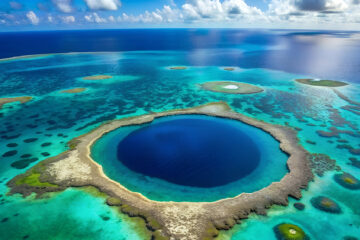
The Bahamas, an archipelago of almost 700 islands and cays north of Cuba, stretches over 800 km between Grand Bahama Island and Great Inagua Island. The thriving Creole community has grown due to the islands’ unique position at the gateway to the Caribbean Sea, the Gulf of Mexico, and the Central American region.
Few individuals have played a crucial role in shaping and preserving Haitian Creole as Pierre Vernet, a distinguished linguist, educator, and lexicographer.
The Gullah people, also known as Geechee in some areas, are direct descendants of enslaved Africans who were brought to the American South’s sea islands and coastal plains during the 17th and 18th centuries.
Krio is a vibrant English-based Creole language spoken in Sierra Leone. It serves as a lingua franca, connecting people from different ethnic and linguistic backgrounds. Only about 10% of Sierra Leone’s population speak Krio as their first language, but over 90% of Sierra Leoneans use it as a second language, making it a crucial part of national identity and daily communication.
Papua New Guinea (PNG) is one of the most linguistically and culturally diverse countries in the world, home to over 800 languages and hundreds of distinct ethnic groups. While it may not be traditionally associated with Creole cultures like the Caribbean or the Indian Ocean, Papua New Guinea has a unique form of Creolization embedded in its history, language, and identity.
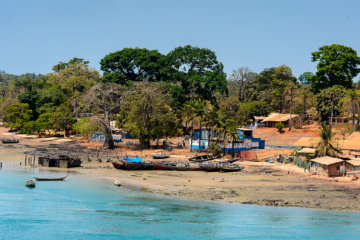
Guinea-Bissau is a tropical West African country located on the Atlantic coast with a rich and diverse cultural history. Once part of the Kaabu Empire and later a colony of Portugal, Guinea-Bissau has developed a unique Creole culture blending African and European elements. This article explores the Creole people’s origins, challenges, and cultural contributions, who emerged during Portugal’s maritime expansion in the 15th century.
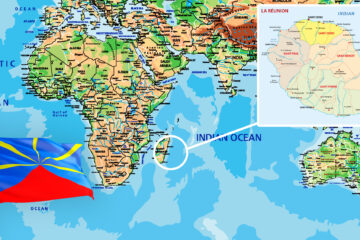
Réunion Creole, a language as vivid and diverse as the island it hails from, stands as a testament to the rich cultural tapestry of Réunion. Nestled in the Indian Ocean, this language embodies the fusion of influences from Africa, Europe, Asia, and Madagascar, mirroring the island’s multifaceted heritage.
Portuguese Creoles are credited with having drawn Africa into the international trading systems of the Indian and Atlantic oceans in the 16th century. When the Portuguese Empire colonised the nation of Angola in 1575, a distinctive Creole culture began to emerge.
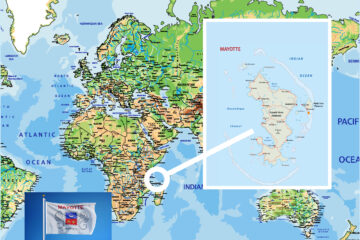
Mayotte is a department and region of France, comprising an archipelago of islands in the Indian Ocean, between the coast of Mozambique and Madagascar. A coral barrier reef surrounds the archipelago, sheltering a marine reserve and the largest coral reef lagoon in the world.
Saramaccan Creole is a unique and fascinating language that developed in Suriname as a result of the transatlantic slave trade. It is based on a mixture of African languages, Dutch, and other European languages, and has its own distinct grammar, vocabulary, and pronunciation.
If you’re Gena Robinson, you begin a task she referred to as operation “push” for better results. She said that “scattered” regions meant her results did not reflect the complete story of a person who derived from the journey of a people with a clear cut diaspora outside of Africa.
International Magazine Kreol Cookies Policy
Our Website uses cookies to improve your experience. Please visit our Cookies page for more information about cookies and how we use them.